
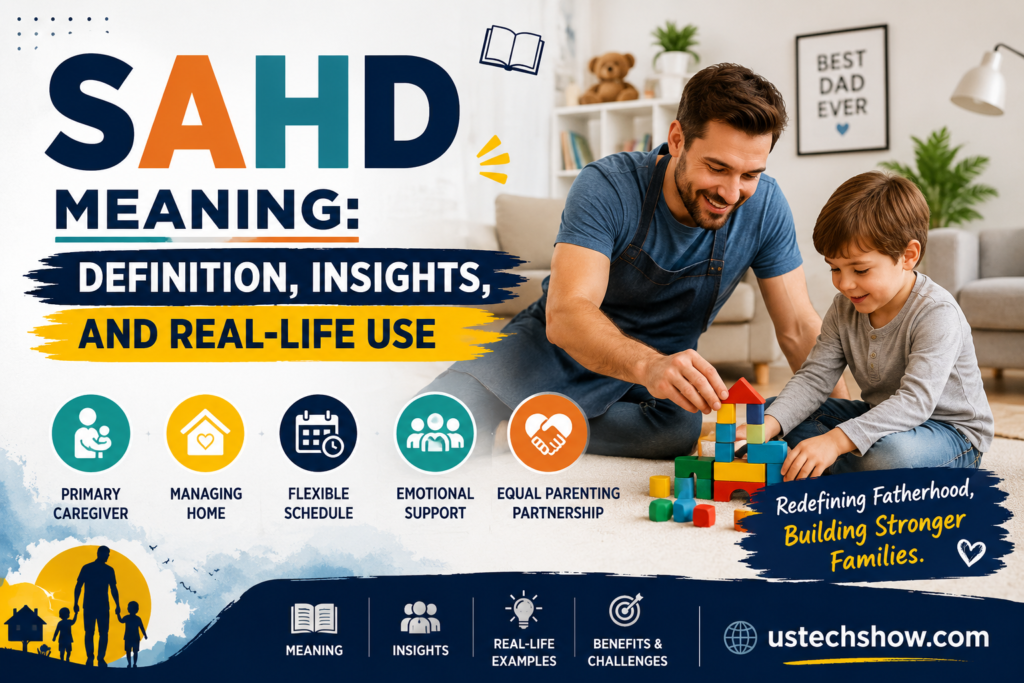

In a world where traditional gender roles are constantly evolving, the term SAHD has emerged as a powerful badge of honor for many fathers. But what does SAHD really mean? As more dads embrace their role as stay-at-home parents, this acronym is gaining traction and reshaping our understanding of parenting dynamics. The influence of SAHDs extends far beyond the home—they’re redefining family life, challenging stereotypes, and carving out new paths in child-rearing. Whether you’re curious about this modern trend or considering taking on the role yourself, let’s dive into the meaning of SAHD and explore its significance in today’s society.
What Does SAHD Mean?
SAHD is an acronym for Stay-at-Home Dad, which refers to a father who is the primary caregiver for his children and/or does the majority of the housework.
SAHDs differ from traditional father roles in that they are full-time, actively involved in the direct care and upbringing of children, a role traditionally associated with mothers.
This is indicative of evolving family dynamics and contemporary beliefs regarding gender roles.
Kendall says SAHDs are not career-focused men who are simply taking time out to raise their family.
In all, SAHDs are reshaping modern dad culture while helping our children develop, and in the process smashing long-held stereotypes.
The Origin and Full Form of SAHD Explained
Acronym Explanation: A stay-at-home dad ( SAHD) is a father who is the primary or sole caregiver of his children and who typically does not work outside of the home in order to care for his children.
It signals a departure from traditional parenting, in which mothers did the bulk of the work.
As gender roles changed, a growing number of dads turned their attention to life at home with the children. In the increasing number of dual-income households, some fathers opted out of work to become full-time dads. Today, the SAHD is an accepted figure in modern parenting and family evolution.
SAHD in Modern Context: Why It Is Becoming Popular
SAHDs are on the rise as fathers take on full-time childcare duties and defy traditional parenting norms.
Economic shifts and rising prices have caused many families to depend on flexible roles, such as stay-at-home fathers.
And society is more understanding that parenting is not a gender thing.
Social media and online forums have contributed to greater visibility and support for that way of life.
In general, SAHD is indicative of a contemporary move toward more active and varied types of fatherhood.
Key Characteristics of a SAHD Lifestyle
SAHD life is the full-time care of children, day-to-day activities and running the household.
Flexibility among dad is something that has become very apparent as they learn to respond to the needs and schedules of their children.
A lot of SAHDs establish social networks through other parents and community events.
Emotional support is an essential component of a presence in a child’s life.
In general, SAHD advocates for equal family obligations and balanced parenting.
How SAHD Differs from Traditional Parenting Roles
SAHDs assume the role of primary caregiver, as opposed to the traditional stay-at-home mother role in which the mother is normally the caregiver. They have a hands-on approach to parenting — they are the ones who take the kids to school, prepare their meals and mind them. This disrupts traditional gender norms, as fathers are now expected to participate actively in household duties. SAHDs are more bonded with their children because of this perpetual engagement. All in all, it’s a more equal and contemporary way to look at parenting.
Common Misconceptions About the Term SAHD
Many adults wrongly think SAHDs lack ambition, but many are educated and choose family over careers. Some believe they only perform household chores, but many also work remotely or own businesses. Another Myth is that it is easy to be a SAHD. Stay-at-home dads need all the support they can get. Does that not tell you something about the nature? Are Earning Fulltime Support SAHDs take care of responsibilities those fulltime fathers and mothers have but were not aware of prior to the announcement. “People also think society doesn’t approve of SAHDs, and that’s changing,” he concluded. Recognizing these myths will help you honor today’s parenting roles.
Real-Life Examples of SAHD in Everyday Families
A lot of dads now are SAHDs, juggling full-time childcare and housework.
Dads who become primary caregivers after their partner goes back to work.
Some choose to step away from their careers to better support the needs of their family and parenting balance.
In many households, stay-at-home parenting roles are shared or fully assumed by both partners.
These facilities, with the examples of radars and computers, showed how SAHDs are transforming contemporary family life.
Benefits of Being a SAHD in Today’s World
SAHDs form deep emotional connections with their children in part because of regular, daily contact.
They have the advantage of having flexible working hours to make it easier to juggle family life.
This particular role allows for a level of equality as it challenges the traditional gender norms.
It is also possible to decrease the cost of childcare and to allow for a better financial family balance.
But it is not simply the day-to-day routine that SAHDs take pride in; they are fulfilled by seeing their children grow and learn.
Challenges Faced by SAHDs and How They Manage Them
SAHDs experience social stigma based on traditional parenting roles.
They have a hard time managing their time because they still need to do household chores while taking care of their children.
Money stress can be an issue, too, for single-income households.
A lot of SAHDs cope with the pressures by finding support groups and online communities.
In general, to get through the day, they depend on flexible mindsets and grit after grit.
Final Thoughts on the Meaning and Importance of SAHD
SAHD is indicative of the changing aspect of modern parenting where fathers become primary or equally active caregivers.
This helps to dispel traditional gender stereotypes and family roles.
This post encourages co-parenting and greater family unity.
Increasing acceptance signals evolving attitudes toward contemporary fatherhood.
In general, Saudade Daddy underscores the need for equal and varied parenting styles in the world today.
FAQs
What does SAHD mean?
SAHD stands for Stay-at-Home Dad, a father who takes primary responsibility for childcare and household duties.
Is being a SAHD a full-time role?
Yes, SAHDs usually manage children, home tasks, and daily family routines full-time.
Why are more fathers becoming SAHDs?
Changing family structures, rising costs, and evolving gender roles are encouraging this lifestyle.
Do SAHDs only do household chores?
No, many SAHDs also support learning, emotional development, and sometimes work remotely.
How is SAHD different from traditional father roles?
Unlike traditional roles, SAHDs are actively involved in daily childcare and home responsibilities.
What are the benefits of being a SAHD?
Stronger parent-child bonding, flexible lifestyle, and improved family balance are key benefits.
What challenges do SAHDs face?
They may face social stigma, financial pressure, and time management challenges