
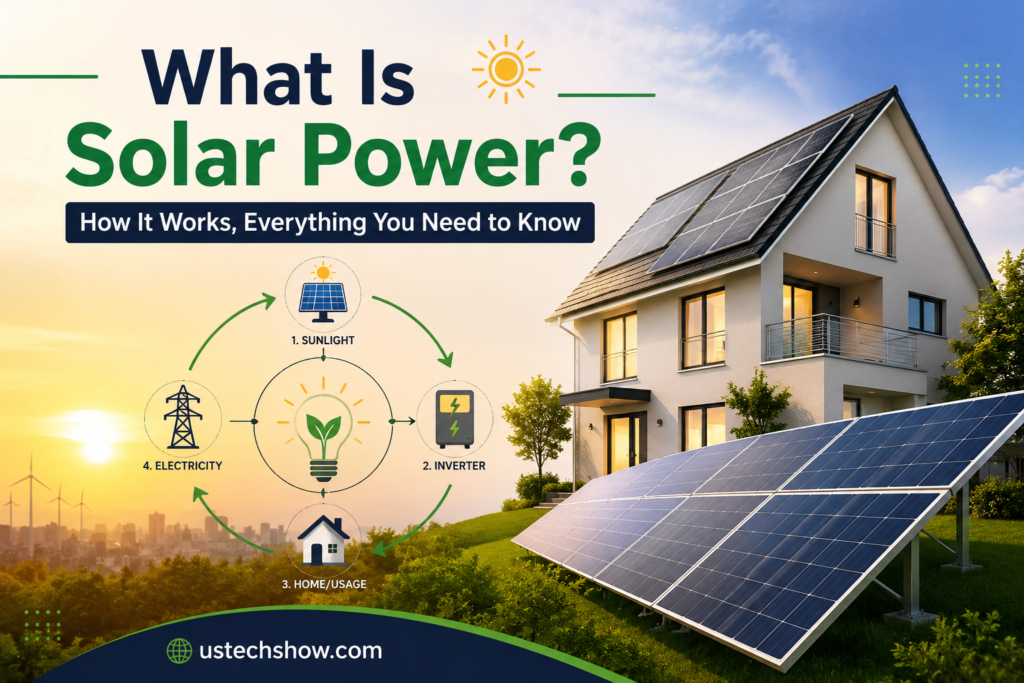

What Is Solar Power?
What is solar power is the use of Sunlight and Particles of sunlight called Photons to support Energy production through modern Solar technology. Also known as Solar energy, it is a trusted Renewable energy and Energy source that converts Solar radiation into Renewable electricity for Electricity generation.
From my experience, people often notice the biggest benefit after understanding how it improves Energy efficiency, reduces Energy use, and supports Lower energy consumption without relying heavily on Fossil fuels like Coal and Natural gas.
This shift encourages Clean energy, Green energy, Clean power, Low-carbon energy, and a Clean energy alternative that helps both homes and Organizations achieve Net zero goals through Carbon reduction, Emissions reduction, Decarbonization, and stronger Climate action.
As a result, it promotes Environmental sustainability, reduces Greenhouse gas emissions, lowers overall Environmental impact, supports Sustainable development, drives the Energy transition, strengthens Global energy security, and positions solar as a Leading energy source and an important part of Future energy, with continued growth expected through 2027.
The History of Solar Power
The History of solar power shows that Solar power has evolved through centuries of Discovery and Innovation. Long before modern systems, Earliest civilizations used Magnifying glasses to focus Sun’s rays and Light fires, proving the value of Solar energy.
A major step came in 1839, when French physicist Alexandre-Edmond Becquerel, often simply called Becquerel, identified the Photovoltaic effect after a Semiconductor material such as Platinum or Silver was Exposed to Solar radiation, causing an Electrical current to be Formed.
From my experience studying renewable technologies, this remains one of the most important moments in Scientific discovery because it laid the foundation for modern Energy conversion.
In the 1880s, Charles Fritts created the First solar cell, inspiring more Scientists to improve Solar technology. Another Breakthrough arrived in 1954 when Bell Labs introduced the Silicon photovoltaic cell, using Silicon to build a more practical Photovoltaic cell.
Today, Photovoltaics, Solar cells, Renewable energy, Clean energy, Energy production, Electricity generation, and better Semiconductor designs continue to Harness solar energy more efficiently.
How Does Solar Power Work?
Understanding How Does Solar Power Work? becomes much easier when you start with the Sun’s core, where Nuclear reactions cause Hydrogen protons to fuse into Helium, releasing Massive quantities of energy.
This Energy travels from the Sun across the Solar system as a Spectrum of Electromagnetic waves, also called Electromagnetic radiation, before reaching the Earth. From my experience explaining this topic, many people are surprised that Solar energy not only powers modern technology but is also essential for Creating life and Sustaining life.
When sunlight reaches the Earth’s surface, it is Absorbed and later Radiated into the Atmosphere, where the Greenhouse effect allows Greenhouse gasses such as Water vapor and Carbon dioxide to trap Heat, forming a Layer of insulation that keeps our Planet Warm and Livable.
Living creatures depend on this process directly through Photosynthesis or indirectly through the Food chain. Today, Solar photovoltaic (PV) and Concentrated solar power (CSP) Systems Convert sunlight into different Forms of energy, including Electricity and Thermal energy, supporting Energy conversion, Electricity generation, Renewable energy, Clean energy, and the continued growth of Solar power.
What Is Solar PV?
Solar PV is one of the most effective ways to turn Sunlight into Electricity by using the Photovoltaic effect, where the Generation of voltage happens after Exposure to light. A typical Solar panel or Module works as a Photovoltaic system that contains an Array of Photovoltaic cells, also called Solar cells or PV cells, with anywhere from One to Hundreds installed on a Single PV panel or PV panel.
Understanding the role of a Semiconductor made from Silicon or other Semiconductor materials makes the process much easier because these materials create an Electrical field. When sunlight is Absorbed, Electrons move to produce an Electrical current, creating a steady Flow of energy as Direct current (DC) based on the Amount of sunlight received.
This DC electricity is then changed into Alternating current (AC) through Solar inverters, delivering AC electricity at a Set voltage for everyday use. A complete Solar panel system can use Excess energy to charge a Solar battery or send it to the Electrical grid, where Homeowners may receive Energy credits on their Electric bill through Net metering for their Solar array.
This Conversion method supports Smaller-scale applications like Powering a Calculator, while larger PV power stations provide Greater electricity generation for Entire towns, advancing Renewable energy, Clean energy, Energy conversion, and reliable Electricity generation.
How Does Photovoltaic Energy Work?
Photovoltaic energy is the process that allows Solar power to become usable Electricity by capturing Energy generated from the Sun. The key to this process is Solar irradiance, also called Irradiance, which measures the amount of Solar radiation reaching the Earth’s surface as Sunlight.
It is commonly measured in Watts per square metre, with an average value of 1367 W/m2, known as the Solar constant. In a Solar photovoltaic power plant, Solar panels Convert light into electricity using Solar cells made of Silicon. As Light made of Tiny particles called Photons strikes the cells, Electrons begin moving and create an Electric current through the Photovoltaic effect.
Many people overlook how important proper Exposure to sunlight, Support structures, correctly Tilted and Oriented panels, and accurate Positioning are for improving Efficiency and increasing energy Output. Inside modern Solar power plants, an Inverter changes Direct current (DC) into Alternating current (AC), making Conversion possible so utilities can Transport electricity safely to Homes.
A Solar power park also relies on a Control system to monitor Plant performance, maintain a stable Connection with the Power grid, and deliver Generated electricity efficiently while supporting Renewable energy, Clean energy, Electricity generation, and better Energy conversion.
How Are Solar Panels Different from Photovoltaics?
Many people use Solar panels and Photovoltaics as if they mean the same thing, but they have different roles in Solar power. Solar panels collect Solar irradiance to Generate energy, while Photovoltaic technology focuses on using that captured energy to Convert it into Electricity through efficient Energy conversion.
Depending on the system, Heat and Thermal energy can also be used to support Energy generation in certain solar applications. From my experience, understanding this small difference makes it much easier to see how modern Solar technology delivers reliable Electrical energy while supporting Renewable energy and Clean energy for homes, businesses, and future power systems.
What Is Concentrated Solar Power?
Concentrated solar power (CSP), also known as Concentrated solar thermal power, works differently from standard solar panel systems because it uses Mirrors to Reflect and Gather sunlight onto Fluid-filled receivers.
The captured Sunlight creates Solar heating, raising the Temperature of the Fluid to produce Thermal energy and Hot water.
This stored Energy is then used to Power engines or Spin turbines that Generate electricity for homes, businesses, and Power plants connected to Electrical grids. From my experience, this method is especially effective for Large-scale utility projects and Industrial applications, where Solar power plants can generate Hundreds of Megawatts (MW) of Electrical energy using advanced CSP systems.
Even on a Smaller scale, technologies like Solar cookers show how this approach can be practical. Overall, it strengthens Renewable energy, supports Clean energy, improves Energy generation, advances Solar technology, makes better use of Heat energy, and increases overall Energy conversion efficiency.
Active and Passive Solar Energy Systems
PV and CSP systems are examples of Active solar energy systems because they use advanced Solar technologies to directly Produce energy. In contrast, Passive energy systems rely on Sustainable design and smart Solar design, including Solar architecture, to make the most of Natural heating and Natural cooling without generating electricity.
As the Sun warms the Earth, Building materials such as Wood, Metal, and Glass Absorb solar energy and store it as Stored heat. Later, when the Atmosphere cools, the Heat moves through Conduction, Convection, and Radiation to help maintain comfortable indoor temperatures. From my experience, skilled Architects and Engineers often combine these ideas to create Efficient solutions and Inexpensive solutions that Heat buildings and Cool buildings naturally.
Features like a White roof that can Reflect the sun’s energy or a Solarium added to a Building improve comfort while supporting Renewable energy, Clean energy, and better Energy efficiency.
What Are the Main Benefits of Solar Power?
The biggest Benefits of solar energy come from its Carbon-free nature and its ability to provide reliable Solar power without depending on Fossil fuels or extensive Mining.
By Harnessing sunlight, modern systems transform Sunlight into Clean power through efficient Energy production and Electricity generation, helping to Generate electricity with little to no Carbon dioxide emissions or harmful Carbon emissions.
One of the most valuable features is the Versatility of solar technology, as different Power plants, including Concentrating Solar Power (CSP) and Thermodynamic power plants, can meet a wide range of energy needs.
This flexibility supports Renewable energy, Sustainable energy, Low-carbon energy, and delivers lasting Environmental benefits while making Clean energy a practical choice for homes, businesses, and industries.
The Future of Solar Power
The future of solar energy is being shaped by rapid Solar power advancements across the International regulatory landscape, Business landscape, and Technology landscape. In the United States, the Department of Energy and the Biden administration continue supporting Energy storage improvements and Decarbonization efforts, while states such as California and Nevada encourage Homeowners through Tax credit incentives for Going solar.
As demand grows, some Solar companies are even facing challenges related to rising Energy needs and Excess solar installations. Around the world, India is expanding capacity through Adani Green Energy, including the 1 gigawatt (GW) Khavda solar PV park in Gujarat as part of its 30GW capacity plans.
Meanwhile, UK-based Lightsource is developing a 560 MW Solar PV park in Greece, which could become the Second-largest solar park in Europe, behind Witnitz solar park in Eastern Germany. From my experience following clean-energy projects, some of the most exciting developments include Solar-powered refrigerators helping combat Malaria outbreaks in Africa by preserving Vaccines at a Safe temperature, while Japan is exploring Space-based solar energy transmission from space to Earth by 2025.
These breakthroughs are supported by the Shrinking cost of solar power, which has fallen by 90% over the Last decade, along with advances in Energy storage systems, driving Renewable energy, Clean energy, Solar innovation, Solar technology, and the broader Global energy transition.