
What Is a Value Proposition?
A value proposition is a simple statement that tells every customer and customers why a business, product, or service is worth their attention. In my experience, the strongest clear message is also a concise message because it quickly explains the benefit, benefits, and how it solves a problem with the right solution.
It shows the real business value through smart messaging, positioning, and effective value communication, whether it appears on a home page, product pages, website, websites, sales content, marketing, sales materials, marketing materials, or product packaging.
The main purpose is to help people choose your brand instead of competitors in a competitive competition by highlighting the right features, helping you stand out from the crowd, attract new buyers, retain loyal ones, improve customer acquisition, strengthen customer retention, and differentiate your offer through real differentiation.
A strong message also creates an emotional connection, understands needs, wants, customer needs, and customer wants, supports companies in achieving business growth, builds a lasting relationship, delivers unique value, provides competitive advantage, and ensures the first sentence contains the important elements that encourage direct communication with the audience.
Why Your Business Needs a Value Proposition
A strong value proposition can completely change how a business grows because it gives every customer a clear message about why they should choose you instead of your competitors. From my experience, the most effective brands use simple messaging to serve the right audience, present the best offer, and show why it matters.
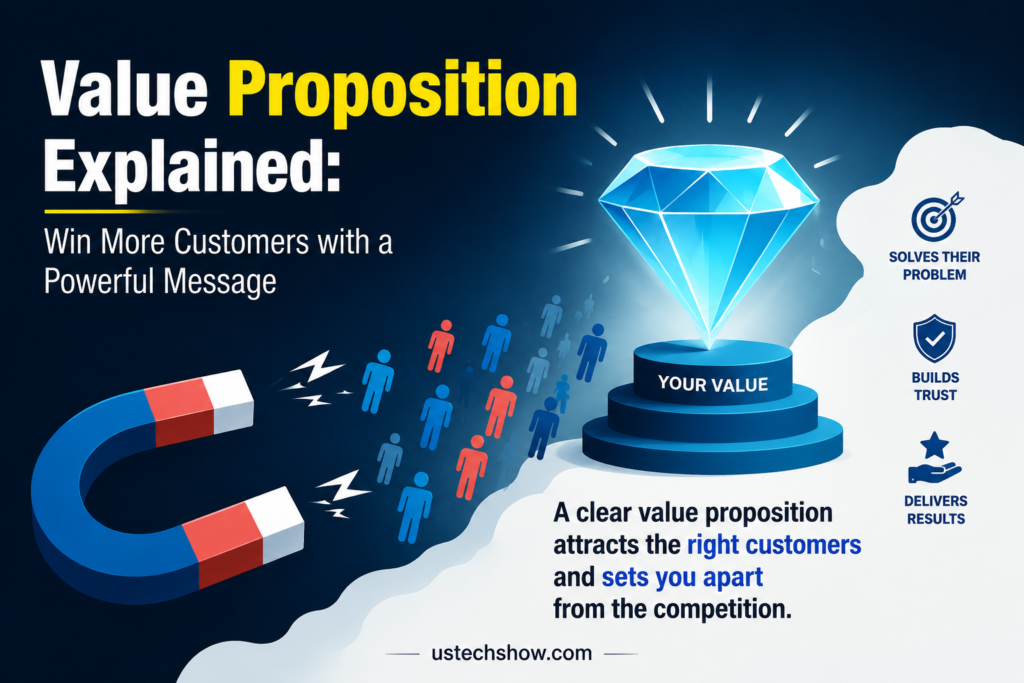
This approach attracts the right customers, brings people who are a good fit, reduces tyre-kickers, and helps you sell to those who truly need your solution. In crowded markets, a clear value proposition becomes the deciding factor that differentiates your company, lets you compete with larger competitors, and builds a lasting competitive edge in the market.
A well-known model is Warby Parker, which entered the eyewear industry when a single company held 80% of the market.
By offering stylish prescription glasses at a fraction of the typical price through a home try-on programme, the brand was able to carve out its own space, earning attention from Harvard Business School researchers for disrupting established industries.
A value proposition also guides every part of marketing, helps marketing content reinforce one consistent promise, supports a marketing plan template, improves consistency, strengthens your strategy from the start, aligns the entire team, sharpens every sales pitch, improves customer service, helps everyone explain the company’s value, keeps a shared value proposition, and ensures the whole team stays on the same page.
What Makes a Good Value Proposition?
A great Value Proposition combines the Best Characteristics into a Simple, Easy to Understand statement that a Customer can grasp in a Single Reading without needing to Re-read, Decode Industry Terms, or face a Complicated explanation.
In my experience, keeping it within 1 or 2 Sentences creates a Clear Message that stays Customer-Focused and highlights Customer Benefit instead of only describing a Business or its Product Features.
A truly Effective, Specific, Persuasive, and Benefit-Driven message explains how it is Different from Alternatives or a Competitor, delivering better Outcomes such as More Time, Less Stress, Clearer Visibility, and stronger Finances, just as a Cloud Accounting Platform promises.
It should also remain Brand-Aligned through Brand Consistency, reflect Brand Values, strengthen Trust, and support Trust Building with authentic Messaging, Communication, Clarity, Simplicity, Persuasion, and Credibility.
A well-known example is Warby Parker, whose Social Mission ensures that every Pair of Glasses Sold helps Distribute another pair to Someone in Need, creating perfect Alignment between its Promise, Value, Customer Needs, Customer Experience, Competitive Advantage, Unique Selling Point, Brand Identity, Business Growth, Customer Value, Market Differentiation, and measurable Results.
Types of Value Propositions
A strong Value Proposition can take many Types, and in my experience, choosing the right approach depends on your Customer, Business, Specific Product, or Service rather than following trends.
Every Unique Statement should be Tailored to highlight Features, Benefits, Value, and the right Price Point while standing out from Competitors. Among the Popular Types, 1 focuses on Low Pricing, Competitive Pricing, Budget-Friendly Products, Discount Stores, Affordable Price, Discounted Prices, Multi-Month Plans, Promotions, and the Subscription Business Model to Attract Customers.
2 highlights Quality, Higher-End Items, Superior Performance, Reliability, premium Materials, careful Production, trusted Certifications, respected Awards, strong Reputation, Excellent Customer Service, and explains Higher Prices through a Compelling Value Proposition.
3 emphasizes Customization, Customization Options, Customizing, Personalized Experience, Individual Needs, Wants, allowing buyers to Select Specific Features, Colors, and Designs with greater Flexibility and Choice.
4 promotes Convenience, Time Saved, Ease of Use, Delivery Services, Delivered purchases to Customers’ Doors, an Online Store, and Shopping from Home to simplify the Purchase Decision.
5 focuses on Uniqueness, a Unique Offering in the Market, solving an Existing Problem more Effectively than Alternatives while adding Exclusivity found Anywhere Else.
6 showcases Innovation, staying Ahead of the Curve with Innovation-Focused, Cutting-Edge Technology, advanced Capabilities, a commitment to Stand Out, and Up-to-Date Technology. Finally, 7 centers on Customer Results, the Holy Grail where the Business Function is to achieve Desired Outcomes, Increased Productivity, Improved Customer Relationships, Generate Interest, stronger Offerings, Solutions, better Performance, richer Experience, Efficiency, Productivity, Customer Satisfaction, Competitive Advantage, Differentiation, lasting Success, and measurable Outcomes while keeping every Promise meaningful.
Brand Value Proposition vs. Product Value Proposition
Understanding the difference between a Product Value Proposition and a Brand Value Proposition helps businesses create stronger connections with their Target Audience.
A Product Value Proposition is Specific to a Single Product or Service, explaining how the Offering Solves Problems through Unique Features, meaningful Benefits, and Product Value for a particular Customer Segment, making it useful for Purchase Decisions, Marketing Campaigns, Product Pages, and Sales Conversations. A Brand Value Proposition, however, reflects the Brand, Company, Core Values, Mission, Overarching Promise, and long-term Promise that encourages Customers to Choose the business over Competitors.
Strong Brand Messaging and Product Messaging work together across Different Levels and Different Purposes within a clear Messaging Strategy, staying Consistent across every Touchpoints to improve Customer Perceptions, Brand Engagement, Trust, Long-Term Trust, Brand Loyalty, Relationships, and overall Engagement.
For Large Portfolios and Complex Offerings, Aligning both Value Propositions creates a Unified Customer Experience, supports Business Strategy, strengthens Brand Identity, meets Customer Needs, improves the Customer Journey, enhances the Customer Experience, builds Competitive Advantage, supports smarter Decision Making, boosts Marketing, Sales, Communication, delivers practical Solutions, drives Business Growth, improves Market Position, increases Credibility, and reinforces the overall Value Proposition.
How to Write a Value Proposition
Creating a Strong Value Proposition starts with a clear Strategy, not a Marketing Degree, and from my experience, following 5 Steps saves Time while improving Business Growth.
1. Determine your Ideal Customer Profile (ICP), Target Audience, Target Market, Demographic, Role, Goals, Customer Needs, Wants, Day-to-Day Challenges, and Pain Points, whether they are Small Business Owners running a Bookkeeping Service, spending Evenings on Paperwork, or Existing Customers explaining why they Chose You through Answers gathered with Market Research, a Guide, or insights from Xero.
2 Identify the Main Pain Point, every Customer’s Problem, and the Problems your Product, New Product, or Service can Address, Solve, and turn into practical Solutions.
3 Clarify your Unique Selling Points, Selling Point, Pricing, Competitive Prices, Quality Service, Same-Day Turnaround, Satisfaction Guarantee, Specialised Skill Set, Location, Process, Experience, Industry, Features, Benefits, Customer Benefits, Offering, Technical Specifications, Cloud-Based Accounting Software, Cash Flow, Phone, and Client value from the Customer Perspective.
4 Craft a Value Proposition Statement with a Compelling Message that gains Customer’s Attention using Straightforward, Relevant, Emotionally Resonant Language, Concrete Descriptions, a Specific Focus, meaningful Content, 1 to 2 Clear Sentences, and a First Draft that you can Read Aloud, improve through Several Versions, stay Jargon-Free, avoid empty Innovative or Cutting-Edge claims, and Deliver face-to-face with confidence until it feels like the Right Track instead of chasing Perfection on the First Try.
5 Test the Compelling Value Proposition for Effectiveness through Testing, A/B Testing, A/B Test, Compare Different Versions, see what Performs Best, Drives Conversions, improves Conversion Rate, Performance, Engagement, and Results, then Refine, Align, and keep it Consistently Communicated across your Website, Sales Materials, Ad Campaigns, Customer Touchpoints, Customer Interactions, Messaging, Communication, Brand Positioning, Brand Consistency, Customer Experience, Trust, Credibility, Differentiation, Optimization, and Continuous Improvement.
As your Business evolves with Multiple Offerings, Complex Pricing Models, Market Shifts, a Launch, or feedback from Real People, Prospects, Friends, Customer Feedback, Performance Data, your Team should Revise what is Presented, review Email Subject Lines, Revisit the Message, strengthen every Value Proposition, Resonates with every Audience, Sets Apart your brand, supports Decisions, and ensures each Finished Product becomes a truly Compelling Value Proposition with lasting Problem Solved impact.
Value Proposition Templates and Formulas
When creating a Value Proposition, I have found that using Value Proposition Templates gives every Business a reliable Structure, especially when facing a Blank Page. These Templates include 3 Proven Formulas that you can Adapt for any Target Customer and Desired Outcome.
A Simple Formula or Straightforward Template clearly explains your Unique Approach and keeps the message Benefit-Driven, whether you run a Landscaping Business helping Busy Homeowners enjoy Beautiful Gardens through Design, Planting, and Maintenance all Year-Round, or manage a Bookkeeping Service for Small Business Owners.
A Positioning Statement adds Context by explaining the Market, Competition, Need, Key Benefit, Alternative, and Reason to Believe, as shown by Bright Books, Stress-Free Monthly Bookkeeping, and a Dedicated Bookkeeper instead of DIY Software for a specific Industry.
Another useful Method is the Jobs-to-Be-Done Approach, a Framework inspired by Harvard Business School, where every Product, Service, or Service Offering is built around the Job customers want completed, not just the Technical Work.
An IT Consultant may help Small Businesses keep Systems running while Serving Customers instead of Troubleshooting Tech Problems, creating a better Outcome through the right Offering, Solution, Problem Solving, and attention to Customer Needs and Customer Problems.
This style of Messaging and Communication improves Differentiation, builds Competitive Advantage, strengthens Customer Experience, supports Business Growth, sharpens Strategy, delivers measurable Results, increases Value, earns Trust, boosts Performance, Productivity, Efficiency, improves Market Position, meets Expectations, and contributes to long-term Business Success.
Value Proposition Examples
Looking at real Examples is one of the fastest ways to understand how a Value Proposition works, and in my experience, studying successful Value Propositions from 6 Different Types of Small Businesses makes writing your own much easier.
A Landscaping Business can highlight Stunning Gardens, a Beautiful Garden, and Outdoor Space as the main Benefit, giving customers Enjoyment Without Effort instead of Weekend Work. A Bookkeeping Service builds confidence with Accurate, Up-to-Date Books, Delivered Monthly, showing where a Business Stands while reducing the 2 Biggest Fears of Small Business Owners about Outsourcing, Finances, Mistakes, and Delays.
An Online Retailer may promote Handmade, Locally Sourced Skincare, Delivered to Your Door, Free Returns, and Every Order to prove Product Quality, reduce Risk, and answer every Potential Objection. An IT Consultant offering IT Support for a Productive Team, Issues Resolved in Under 2 Hours, and a Measurable Promise creates more trust than vague Fast Response Times.
A Bakery can stand out with Freshly Baked, Allergen-Friendly Treats, Made From Scratch Every Morning, helping people with Dietary Restrictions choose its Products confidently.
A Freelance Web Designer may promote Custom Website Designs that turn Visitors into Customers, Built in 2 Weeks, Not 2 Months, solving Web Projects Frustration with a Speed Guarantee. Each Specific example improves Differentiation, strengthens Trust, meets Customer Needs, enhances Customer Experience, supports Business Growth, improves Marketing, delivers better Results, Performance, Quality, Reliability, Competitive Advantage, a Clear Promise, greater Value, higher Conversion, stronger Engagement, better Brand Positioning, increased Customer Satisfaction, and a memorable Unique Selling Point.
Common Value Proposition Mistakes to Avoid
A strong Value Proposition comes from a Solid Process, but I have often seen good ideas Falls Flat because of a few Common Pitfalls and Common Mistakes.
Being Too Vague, using phrases like Deliver Excellence or Trusted Partner, may sound Professional, but they lack Specific Detail and fail to explain the real Value of a Business or Product within its Industry. Instead of listing Features, focus on Benefits and meaningful Outcomes, such as turning 24/7 Support into real Help available Day or Night. Avoid Jargon, Technical Terms, and Industry Shorthand that impress Peers but Confuse Customers; use simple Language that feels natural in a Conversation with your Target Audience.
Never Appeal to Everyone or assume Anyone is the right buyer, because a message becomes more Resonating when you clearly Serve, Solve, and address Customer Needs. Always use Testing with Real Customers, then Revisit your Message, because they are the Ultimate Judges, and relying on Guessing instead of Knowing weakens Communication, Clarity, Simplicity, Customer Experience, Credibility, Trust, Differentiation, Competitive Advantage, Engagement, Conversion, Performance, Business Growth, Marketing, Strategy, Results, Improvement, Effectiveness, Brand Positioning, and Customer Satisfaction, ultimately reducing the impact of your Powerful Message.
Communicate Your Value Proposition
Strong Value Proposition creates real impact only when it is shared consistently, and from my experience, the best results come when your entire Team understands and communicates the same Value Proposition.
Place it on your Website, especially the Homepage, where Visitors notice it among the First Things they read, and repeat it naturally across Service Pages, Marketing Materials, Brochures, Flyers, Email Campaigns, and Social Media Profiles so the Core Message and Central Promise remain Consistently clear. Use it during Sales Conversations, Pitching, a Networking Event, or while Responding to an Enquiry, giving every Customer a Clear Answer and Confident Answer that feels Natural with regular Practice.
Include it in your Business Plan, Business Plan Template, Funding proposals, and Growth Strategy to show Investors and Partners that you understand the Market, support Long-Term Business Success, and follow a clear Structure. Train Your Team through Practice Session, Role-Play, and Common Customer Conversations so every Statement improves Customer Interactions, builds Trust, strengthens Communication, Messaging, Brand Consistency, Brand Identity, Customer Experience, Customer Journey, Marketing Strategy, Business Growth, Competitive Advantage, Customer Needs, Customer Engagement, Relationship Building, Credibility, Performance, Results, Collaboration, Alignment, Value, Business Success, Strategy, Implementation, and lasting Consistency.