
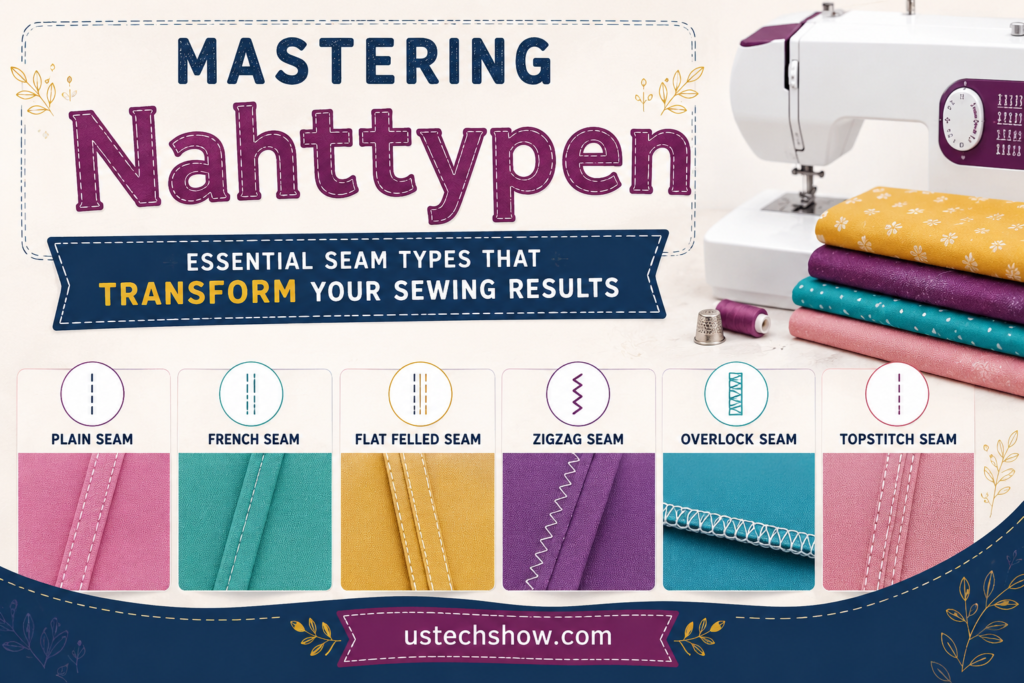

Introduction to Nahttypen
From my experience, one of the biggest improvements in sewing results comes from gaining a deeper understanding of different nahttypen and how they influence every project.
In many creative sewing projects, the right choice of seam types acts as one of the most crucial elements, even though these seams often remain invisible heroes behind successful creations.
Whether you are crafting a cozy quilt, working on a quilt, or designing stylish apparel, strong seam construction, proper fabric joining, and reliable sewing techniques play a pivotal role in improving durability, aesthetics, and functionality.
Good stitch, stitches, and stitching support garment construction, enhance seam durability, strengthen seam functionality, improve seam aesthetics, and contribute to overall project quality. As your sewing skills, sewing knowledge, and sewing methods grow, you begin to appreciate the value of smart seam selection, effective seam design, and quality fabric construction.
This journey through the fascinating world of nahttypen can elevate your style, design, craftsmanship, and fashion design approach while supporting textile work, sewing craftsmanship, durability enhancement, aesthetic appeal, and functional seams.
In the sewing world, every stitch counts, and that small difference can transform ordinary creative projects into remarkable results that bring your vision to life, showcasing true sewing creativity, sewing essentials, sewing transformation, sewing mastery, and lasting life in every detail, so dive in and discover how each seam contributes to better results and turns your creative vision into reality.
Nahttypen Overview: Understanding Seam Types
When exploring seam types, I have found that a clear knowledge of understanding Nahttypen helps improve both the appearance and performance of sewing projects.
Every seam application depends on the right seam structure, because the overall structure, seam strength, and lasting strength influence how well garments perform over time.
A plain seam remains a popular basic seam for everyday clothing, while flat-felled seams, French seams, and bound seams provide unique benefits and valuable seam benefits for specific uses.
Effective seam selection starts with evaluating the fabric type, intended garment purpose, and required level of durability to meet different durability requirements.
For instance, delicate fabrics like silk often use enclosed seams to minimize fraying, whereas heavy fabrics such as denim benefit from reinforced stitching and durable reinforced seams.
This approach strengthens garment construction, seam construction, and textile construction while supporting better fabric durability, fabric strength, seam reinforcement, seam performance, and seam functionality.
Skilled designers and tailors apply sewing techniques, construction methods, and thoughtful seam design to create quality apparel, improve garment quality, and ensure excellent garment durability.
Whether working in fashion, apparel, or clothing design, the right choices lead to stylish garments that offer comfortable wear, enhanced comfort, better wearability, and meaningful durability enhancement, resulting in products that are truly stylish, comfortable, and long-lasting, including exceptionally long-lasting garments made through expert professional tailoring and quality sewing with the right fabric.
Importance of Choosing the Right Nahttypen in Creative Sewing
From my experience, success in creative sewing depends heavily on choosing the right Nahttypen because every seam type has unique properties that influence both the look and long-term durability of a project.
Different seam types provide specific benefits and seam benefits, affecting project appearance, project durability, and overall functionality. For example, a flat-felled seam delivers excellent strength, a neat polished finish, and strong wear resistance for garments exposed to frequent wear, while a zigzag stitch offers valuable stretch and flexibility for knit fabrics.
Understanding different Nahttypen, fabric behavior, material properties, and other material characteristics helps you avoid an inappropriate seam that may cause seam issues such as fraying or puckering.
This knowledge improves seam selection, seam design, seam performance, and seam functionality, leading to better construction quality, stronger garment construction, and improved fabric performance.
By applying the right sewing techniques, developing stronger sewing skills, and using an informed tailor approach, you can elevate your sewing game, achieve better sewing results, and create beautiful creations through quality sewing.
In the world of Nahttypen, every stitch counts, whether it is a single stitch or multiple stitches, and making informed choices supports lasting craftsmanship, advanced sewing craftsmanship, greater durability enhancement, improved aesthetic appeal, enhanced garment durability, a more polished appearance, and higher project quality across all creative projects and handmade creations.
Different Types of Nahttypen and Their Uses
In the world of Nahttypen, learning about the various seam options can greatly improve your sewing results and overall project success.
Each seam has unique characteristics, specific applications, and a clear seam purpose that affects both aesthetics and durability.
The straight stitch is a highly common stitch and a versatile seam often used on woven fabrics because it delivers reliable strength while supporting bulk reduction.
For stretchable materials and stretch fabrics, the zigzag stitch creates excellent flexibility, helping with fraying prevention and effectively preventing fraying during use.
When working with delicate fabrics such as silk, French seams provide a polished finish by enclosing raw edges, making edge finishing cleaner and more professional.
A flat-felled seam is preferred by many denim enthusiasts because it offers exceptional robustness, strong seam strength, and a durable clean look on denim garments.
Those interested in creative sewing can explore decorative stitches, decorative sewing, and serged edges to add creativity while improving seam finishing and finishing seams. Through understanding variations in seams, fabric behavior, seam design, seam construction, and garment construction, you can elevate your sewing game and create creative projects with better functionality, project quality, and balanced form and function.
Applying the right sewing techniques, focusing on craftsmanship and sewing craftsmanship, and selecting durable seams or flexible seams based on the fabric and woven materials involved can improve seam performance, seam durability, aesthetic appeal, and deliver a professional finish, stylish appearance, polished seams, and a consistently neat finish or clean finish in all sewing projects.
Common Nahttypen Used in Fashion Design
In modern fashion design, selecting the right seam types is a key part of creating high-quality clothing, and many experienced fashion designers and designers rely on Nahttypen to turn their creative visions into reality.
One of the most respected options is the French seam, which encloses raw edges to create a clean finish and elegant finish, making it ideal for refined fashion garments and elegant garments.
Another popular choice is the flat-felled seam, often seen in jeans and sportswear, where excellent seam strength, strength, seam durability, and overall durability are essential.
Beyond construction, decorative seams and decorative stitching add visual interest, support fashion creativity, and highlight important design elements that improve appearance, aesthetic appeal, and overall clothing aesthetics.
These functional seams also improve seam functionality, performance, and long-term garment performance. Through careful seam selection, effective seam construction, reliable fabric joining, and strong garment construction, professionals create durable garments, premium quality garments, and attractive stylish clothing.
This combination of creative design, apparel design, garment design, clothing construction, professional tailoring, fashion craftsmanship, and advanced sewing techniques helps achieve a distinctive style, refined clothing style, and long-lasting durable seams that enhance both the beauty of creations and the quality of modern clothing.
Industrial Nahttypen in Manufacturing
In modern garment production, the role of Nahttypen goes far beyond simple stitching, as manufacturers focus on efficiency, speed, and long-term durability to meet market demands.
In my experience observing industrial operations, industrial sewing machines and advanced sewing machines are built to create consistent seam types that support mass production while maintaining excellent garment quality.
Popular seam types such as overlock seams are widely used in factories and factory production because they secure fabric edges, provide unraveling prevention, and allow fast assembly during the assembly process.
Likewise, lockstitch seams remain a trusted option in many industrial settings due to their strong structure and reliable structure. Effective industrial seam selection and careful seam selection help balance performance, manufacturing speed, and seam durability throughout garment manufacturing, textile production, and textile manufacturing.
Through industrial sewing, proper fabric handling, efficient garment assembly, and advanced stitching technology, companies improve production efficiency, streamline production workflow, and strengthen production processes.
Maintaining strict quality control, meeting quality standards and production standards, and improving process optimization are essential parts of successful industrial processes.
These methods support cost-effective production, enhance seam performance, strengthen seam construction, and ensure that industrial garments are built with durable seams and reliable seams, reflecting the expertise of the sewing industry, industrial craftsmanship, and modern sewing production systems while supporting strong fabric construction and overall manufacturing efficiency.
Nahttypen and Fabric Selection
In my experience, successful sewing starts with smart fabric selection, because even the best seam types will not perform well if they are paired with the wrong fabric type.
The process of choosing the right Nahttypen requires understanding the relationship between Nahttypen and fabric selection, along with key fabric characteristics and overall fabric behavior.
For example, lightweight fabrics such as chiffon and organza often work best with delicate seam types that support bulk reduction and preserve fabric softness.
In contrast, heavy fabrics like canvas and denim usually require reinforced seams and strong seams that provide excellent tension resistance and wear resistance.
When working with stretch fabrics such as jersey, selecting elastic seam types improves flexibility, enhances seam elasticity, and supports breaking prevention during regular use.
Strong fabric compatibility and proper matching contribute directly to comfort, durability, and aesthetic appeal, while also improving seam performance, seam durability, and seam strength.
By combining thoughtful material selection, effective textile selection, reliable fabric support, and proven sewing techniques, you can achieve professional-quality results in any sewing project.
This approach strengthens seam construction, garment construction, and apparel construction, leading to higher construction quality, better garment quality, improved project quality, stronger sewing results, and more dependable flexible seams and durable seams through professional sewing and lasting quality craftsmanship.
Advantages of Different Nahttypen
When evaluating the specific advantages of different Nahttypen, I have found that the best choice often depends on the intended application and overall seam application within a project.
Some seam options are designed to provide extra strength, improve strength, and increase long-term durability, while others focus on flexibility or decorative appeal.
For example, flat-felled seams are well known as durable seams that perform exceptionally well in workwear, supporting strong seam durability and reliable seam performance.
In contrast, French seams create a refined clean interior finish and smooth interior finish, making them ideal for luxury garments and premium garments that require excellent garment finishing.
In industrial environments, overlock seams improve efficiency, contribute to production efficiency, support mass production, and help prevent fraying through effective fraying prevention.
Skilled designers and tailors use careful seam selection to match each seam type with the right level of project suitability, ensuring better garment quality, apparel quality, and overall project quality.
This approach also supports material waste reduction and broader waste reduction, while improving sewing efficiency, quality improvement, and construction quality.
Through smart design decisions, proper fabric handling, advanced sewing techniques, and expert professional tailoring, manufacturers and creators can strengthen garment construction, enhance craftsmanship, and benefit from both decorative seams and functional seams that improve seam functionality across a wide range of sewing projects.
Common Mistakes to Avoid When Using Nahttypen
From my experience working with sewists, many common mistakes happen when people ignore fabric compatibility, which leads to using a wrong seam type for the wrong materials and causes issues like puckering, fraying, and other seam problems.
A very frequent error is not setting correct seam allowances and allowances, or failing to measure fabric correctly, which is necessary for a smooth polished finish and accurate seam quality in all seams.
Another issue comes from improper tension settings on the sewing machine, where incorrect tension settings affect seam durability, seam performance, and overall sewing results, especially when working with different fabric thickness and chosen Nahttypen.
Many also skip proper fabric preparation, such as pre-washing fabrics, ignoring fabric shrinkage, shrink, and changes after washing or laundering, which can alter the fabric behavior and ruin intact seams after completion.
Good prepping fabrics ensures better fabric handling, stronger garment construction, and improved project preparation before the main project, helping to avoid surprises later.
I always recommend testing stitches, trying different stitches, and practicing on scrap pieces before starting real work, because proper stitch testing improves sewing practice, sewing accuracy, and seam consistency, leading to better sewing techniques, stronger sewing craftsmanship, higher quality sewing, and successful project success.
When all these steps are followed, the final result shows improved sewing preparation, better fabric care, a cleaner professional finish, and overall better results in sewing.
Conclusion: Mastering Nahttypen for Better Sewing Results
In my experience with sewing, true improvement in garment construction comes when you fully understand Nahttypen and apply the right seam types in every project, because they directly affect strength, appearance, and the quality of finished products.
Whether using basic stitching techniques or exploring advanced industrial applications, the understanding seam types helps designers and tailors create high-quality garments from both delicate fabrics and heavy-duty materials by carefully choosing the right Nahttype for the required durability, comfort, and style.
In my own practice, I have seen that mastering techniques and improving sewing skills leads to more consistent professional-level results, better seam performance, and higher garment quality, especially when supported by smart fabric selection and precise textile work.
Strong sewing craftsmanship, proper construction methods, and refined sewing techniques play a key role in modern apparel production, fashion production, and clothing design, ensuring improved stitching, enhanced garment durability, and strong aesthetic appeal.
Ultimately, focusing on material strength and disciplined sewing techniques helps transform simple work into durable, stylish, and high-quality results.
(FAQs)
What are Nahttypen in sewing?
Nahttypen are different types of seams used in sewing to join fabrics together. Each seam type has a different purpose for strength, style, and durability.
Why are seam types important in sewing?
Seam types are important because they affect how strong, neat, and long-lasting a garment will be. The right seam improves both quality and appearance.
What is the most common seam type?
The plain seam (straight stitch seam) is the most common because it is simple, strong, and suitable for many everyday fabrics.
Which seam is best for delicate fabrics?
French seams are best for delicate fabrics like silk because they hide raw edges and prevent fraying.
Which seam is used for strong fabrics like denim?
Flat-felled seams are commonly used for denim and heavy fabrics because they provide extra strength and durability.
What seam type is best for stretch fabrics?
Zigzag seams or stretch stitches are best for elastic fabrics because they allow flexibility and prevent tearing.
What happens if I choose the wrong seam type?
Using the wrong seam type can cause problems like puckering, weak stitching, fraying, or poor garment fit.
Can seam types affect the final look of clothing?
Yes, seam types affect both the inside and outside finish of clothing, making garments look either professional or unfinished.
How can I improve my sewing results with Nahttypen?
You can improve results by learning fabric behavior, practicing stitch types, and choosing the right seam for each project.
Are industrial seam types different from home sewing seams?
Yes, industrial seams are designed for speed, mass production, and extra strength, while home sewing focuses more on creativity and detail.