
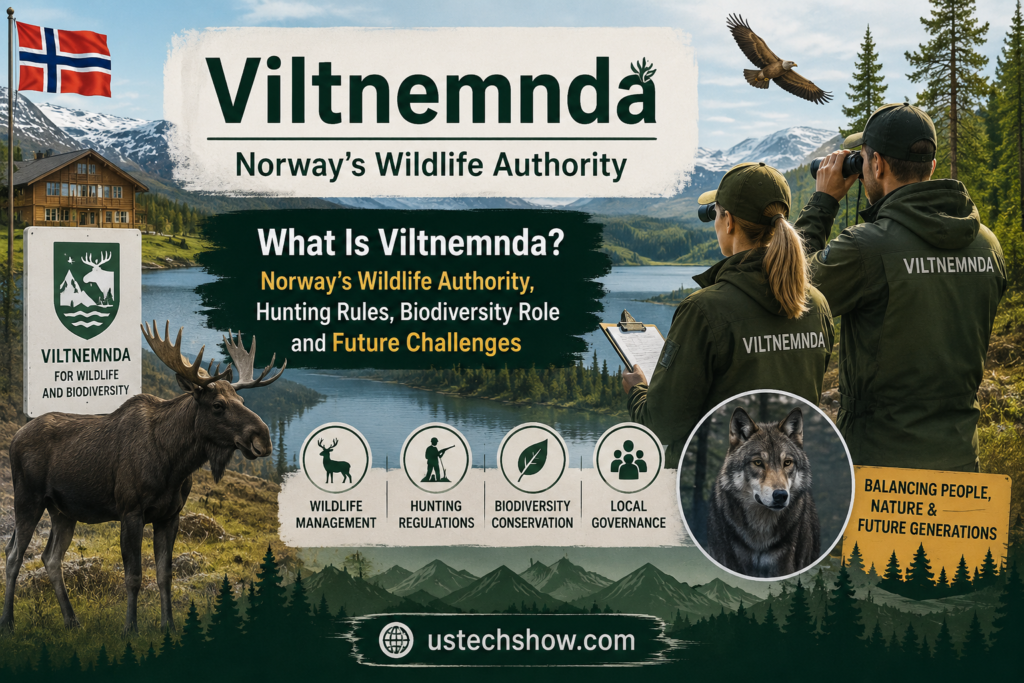

Viltnemnda, a key wildlife authority in Norway, plays an important role in managing wildlife, hunting rules, and biodiversity protection.
It helps regulate hunting, protect species, and maintain balance between people and nature through sustainable wildlife management.
Working with local councils and conservation groups, Viltnemnda supports biodiversity, monitors wildlife populations, and addresses future challenges like climate change and habitat loss.
Its work ensures responsible hunting and long-term protection of Norway’s natural ecosystems for future generations.
What Is Viltnemnda?
From what I have seen while studying wildlife governance systems, Viltnemnda works as a municipal level wildlife board that focuses on managing wildlife and protecting game species through sustainable practices.
Operating under national laws while responding to the needs of local ecosystems, it plays an important role in regulating hunting quotas, enforcing hunting regulation, and setting hunting quotas that support responsible hunting.
The board is also responsible for monitoring wildlife populations, maintaining healthy wildlife populations, and promoting stable populations through better population stability measures.
By managing human-wildlife conflicts and reducing human-wildlife conflicts, while also supporting conservation efforts and strengthening conservation efforts, it helps achieve biodiversity, biodiversity conservation, ecological balance, ecosystem health, ecosystem sustainability, and overall sustainable wildlife management.
In addition, advising local governments on key environmental issues, encouraging wildlife protection, improving environmental stewardship, and maintaining a strong conservation balance are all part of its wider mission.
The History of Viltnemnda
When looking at the development of wildlife systems in Norway, the story of Viltnemnda begins with growing concerns about wildlife management during the mid-20th century.
Its origins and roots are closely linked to increasing industrialization, encroaching development, and pressure on natural habitats. As a result, local communities created organized oversight through advisory committees focused on regulating hunting, improving hunting regulation, and protecting vulnerable species among declining wildlife populations.
Over time, this establishment evolved into a formalized body with defined roles and responsibilities covering game species, broader ecosystems, and modern ecosystem management.
Through strong legislation, a supportive legal framework, and carefully enacted laws, the organization promoted sustainable practices, wildlife conservation, environmental protection, and habitat protection.
From my research into conservation governance, one notable strength has been its holistic approach, combining community involvement, local needs, municipalities, and governance with national conservation goals and wider conservation goals.
This ongoing adaptation and commitment to preserving nature across changing landscapes helps safeguard biodiversity, rich biodiversity, and resources for future generations.
Wildlife Management in Norway
Across Norway, a diverse ecosystem supports remarkable wildlife, from majestic moose moving through forests to playful otters along rugged coastlines, creating a wide array of species that contributes to the country’s rich biodiversity and overall biodiversity.
Based on my observations of conservation systems, successful wildlife management depends on cooperation between Viltnemnda, local councils, and other authorities that promote sustainable practices, animal protection, and care for animals and their habitats through strong habitat conservation.
Their work combines conservation efforts with human interests, focusing on balancing conservation, regulating hunting seasons, enforcing fair hunting seasons, monitoring population dynamics, understanding population dynamics, and mitigating human-wildlife conflicts linked to increasing human-wildlife conflicts.
Through active collaboration among stakeholders, including local communities, hunters, and environmental groups, more effective strategies emerge, creating a collective effort that protects natural heritage for generations to come.
This constant vigilance supports ecological balance, strengthens environmental stewardship, advances nature conservation, improves wildlife conservation, enhances ecosystem protection, and allows people to enjoy Norway’s great outdoors while safeguarding every important species, including the iconic moose and otters.
Structure and Composition of the Board
From my understanding of Viltnemnda, its deliberate design ensures that every board composition reflects true balance, where boards are formed through the municipal council as appointed boards for four years, also written as 4 years, matching local election timing to strengthen accountability and fair elected representations.
Typically, each unit includes 5-7 members, sometimes just 5 members or up to 7 members, especially in larger cities, ensuring a strong and diverse composition.
The structure brings together primary stakeholders like government officials with administrative expertise, hunters’ associations offering practical experience, land owners with agricultural knowledge, and environmental NGOs promoting preservation awareness, along with veterinarian, biologist, and other forms of scientific expertise.
In Sami inhabited areas, indigenous representatives from local communities ensure cultural considerations and traditional rights, including reindeer herding, are respected.
The chairperson, usually among elected members, acts as a liaison with national bodies like the Norwegian Environment Agency, also known as Miljødirektoratet, ensuring smooth wildlife governance.
Meetings happen through quarterly meetings, or once a quarter, with majority vote decisions, while transparency is maintained through public minutes and appeals handled by county governors.
This system supports balanced decision-making on hunting quotas, crop damage, farmer perspective, and population health, guided by laws and best practices.
Regular training programs and state-funded training help members in rural communities act as an adviser for land-use planning, considering wildlife concerns in building projects.
The decentralized structure differs from centralized systems, allowing a localized response to regional differences, such as managing coastal birds versus inland big game across Norway, while promoting inclusivity, stakeholder participation, and strong wildlife governance through conservation management and building powerful governance with truly strong boards.
Roles and Responsibilities of Viltnemnda
From my perspective on Viltnemnda, its crucial role in wildlife management across Norway is centered on maintaining a fair balance between human activities and wildlife conservation, where this body remains fully responsible for overseeing national wildlife governance.
Its key functions include regulating hunting practices, improving hunting practices, setting quotas, managing quotas, and carefully adjusting managing seasons across different seasons to keep populations stable and sustainable, ensuring long-term sustainability while supporting hunters and promoting responsible hunting.
The organization also places strong focus on education, under its full purview, as it actively promotes awareness about local fauna, fauna, and their habitats, increasing habitat awareness in communities so people better understand the importance of biodiversity.
Additionally, it collaborates with stakeholders, including landowners and environmental groups, building strong cooperation for comprehensive strategies that support habitat preservation and species protection.
Another critical responsibility is monitoring wildlife health through continuous data collection, studying population dynamics and ecosystem health to guide inform decisions and future decisions for stronger conservation efforts, conservation planning, and better ecological monitoring, ensuring long-term sustainability in every part of the system.
Key Functions of Viltnemnda
In practical terms, Viltnemnda works by Regulating hunting through careful quotas, while continuously monitoring wildlife populations to ensure long-term balance.
Its role also involves managing human-wildlife conflicts, especially where growing human activity overlaps with natural habitats, and supporting conservation efforts that protect ecosystems and biodiversity.
From my understanding of field-level governance, a major part of its duty is also advising local governments on complex environmental issues, so decisions remain grounded in real ecological conditions and not just policy theory.
Viltnemnda and Hunting Regulations
In my view of how Viltnemnda operates, one of its most important responsibilities is regulating hunting activities and ensuring fair hunting through clear quotas and proper permits, as it carefully determines which animals can be hunted, which species stay protected, and how hunting seasons begin and end under a structured system.
A good example of this hunting regulation framework includes Moose hunting in Autumn with a Fixed quota and strict Age limits, Deer hunting in Late summer–autumn under a Flexible quota with Area-based control, and Small game hunting that Varies under an Open quota requiring a License required.
These regulations are carefully designed to prevent overhunting while still supporting local traditions, showing how wildlife balance and cultural practices can work together in practice.
The Importance of Viltnemnda in Preserving Biodiversity
From my field-level understanding, Viltnemnda in Norway takes a dynamic approach to managing wildlife resources across natural habitats, where strong biodiversity protection and stable ecosystem health are maintained through continuous monitoring and careful regulation of fishing practices, fisheries, and risks of overexploitation.
This helps prevent ecosystem collapse while ensuring balance in nature so that individual species can thrive, flourish, and survive in protected safe spaces. Key initiatives like habitat restoration projects focus on restoring damaged ecosystems, especially for endangered species, while strengthening overall biodiversity through coordinated efforts.
In collaboration with conservation organizations, researchers, and local communities, Viltnemnda promotes stewardship, builds awareness, and delivers education that encourages respect, supports education, and helps in preserving wildlife.
By continuously addressing environmental challenges, improving monitoring, applying best practices, and adjusting adapt strategies, the system ensures long-term ecosystem health, stable natural habitats, and effective protection of species, allowing both nature and human activities to coexist in better balance under proper regulation.
Challenges Faced by Viltnemnda
From my observation of Viltnemnda in real wildlife management, the main challenges in its mission come from balancing conservation efforts with agricultural interests, where farmers often see wildlife threats to crops and livestock, creating real conflict and growing tensions that reduce overall management effectiveness.
At the same time, differences between public perception and scientific data about wildlife populations and their behavior lead to misunderstandings, polarized opinions, and division within local communities, making implementation policies harder to achieve with full acceptance.
Another serious pressure is climate change, a considerable threat that is altering habitats, shifting migration patterns, and affecting many species, which forces constant adapting management practices, greater flexibility, and long-term foresight.
On top of this, limited funding reduces research opportunities and resource allocation, slowing response to emerging issues and weakening overall wildlife management.
In such a complex landscape, Viltnemnda must rely on strong strategic decision-making and continuous decision-making to improve management strategies, ensure effectiveness, and support more successful wildlife management despite increasing pressure on both nature and policy systems.
Future Outlook for Viltnemnda
Looking ahead, Viltnemnda in Norway has a promising future as it continues to evolve with changing environmental conditions and rising societal needs, where stronger focus on biodiversity, wildlife conservation, and wildlife management will remain central to its pivotal role in protecting healthy wildlife populations and maintaining a stable ecosystem supported by rich biodiversity.
With increasing growing awareness, better collaboration, and active engaging citizens, local communities will play a stronger role in stewardship, strengthening the overall sense of responsibility toward natural resources and resources across the nation.
At the same time, the integration of modern technology, including drones, tech-savvy methods, and improved data collection processes for monitoring populations, will help enhance efficiency, streamline operations, and improve framework and methodologies used in decision-making.
Facing climate change, emerging pressures, and other challenges, Viltnemnda must take proactive measures, apply stronger adapt strategies, and respond head-on to real-world impacts through smarter policies, better integration, and continuous innovative approaches.
This ongoing transformation ensures that the organization can foster long-term wildlife conservation and sustainable conservation while managing natural resources effectively for generations to come.
Related More
Viltnemnda, Norway wildlife authority, wildlife management Norway, hunting rules Norway, biodiversity protection, conservation efforts, wildlife board Norway, hunting quotas, ecosystem health, human-wildlife conflict Norway
(FAQs)
What is Viltnemnda in Norway?
Viltnemnda is a municipal wildlife board in Norway that manages wildlife, hunting rules, and biodiversity protection while following national environmental laws.
What are the main responsibilities of Viltnemnda?
It regulates hunting quotas, monitors wildlife populations, manages human-wildlife conflicts, and supports conservation efforts across local ecosystems.
How does Viltnemnda control hunting in Norway?
It sets hunting seasons, defines quotas, issues permits, and ensures responsible hunting practices to prevent overhunting and protect species.
Why is Viltnemnda important for biodiversity?
Viltnemnda helps maintain ecological balance by protecting habitats, preserving species, and ensuring sustainable wildlife management.
Who works in Viltnemnda boards?
Boards include municipal representatives, hunters, landowners, environmental NGOs, scientists, and sometimes indigenous Sami representatives.
How does Viltnemnda handle human-wildlife conflicts?
It manages conflicts by balancing farmer interests, crop protection, and wildlife conservation through regulated policies and cooperation.
What challenges does Viltnemnda face today?
Key challenges include climate change, limited funding, conflicting public opinions, and pressure from agricultural and environmental interests.
How does Viltnemnda support conservation efforts?
It works with local communities, researchers, and organizations to protect habitats, restore ecosystems, and promote biodiversity awareness.
What is the future role of Viltnemnda?
Viltnemnda will rely more on modern technology, data monitoring, and community engagement to improve wildlife management and sustainability.