
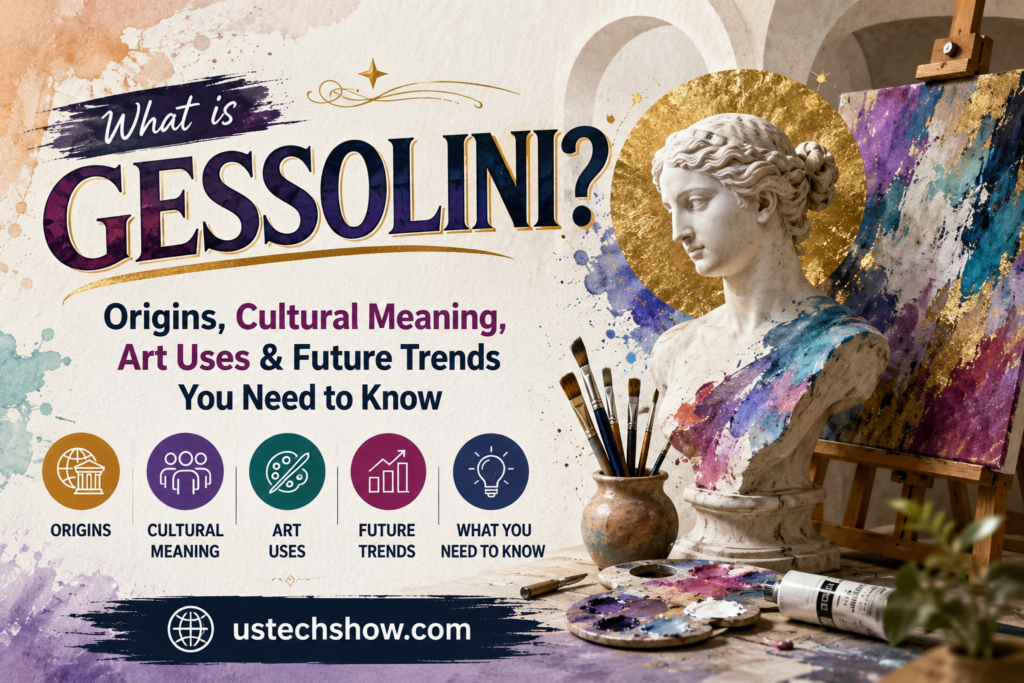

Gessolini is a traditional Italian art form that connects history, culture, and creativity through handmade craftsmanship developed in rural communities. Originally, artisans used natural materials to create detailed designs inspired by daily life, beliefs, and local surroundings.
Over time, it became a cultural symbol used in festivals, rituals, and regional art expressions. Today, it is used in painting surfaces, interior design, sculpture, and modern creative projects that mix tradition with innovation.
Its smooth texture, aesthetic value, and versatility make it popular among artists and designers worldwide. It also influences branding and digital identity, showing how traditional ideas can adapt to modern industries. Overall, Gessolini represents a bridge between heritage and modern creativity, inspiring new artistic trends globally.
The Origin and Evolution of Gessolini
From my experience studying traditional European crafts, Gessolini stands out as a unique art form with deep roots in the rich cultural tapestry of Italy. It emerged in rural communities, where skilled artisans focused on preserving local heritage through a traditional craft.
Historically, it was created from natural materials sourced from the surrounding environment, and talented craftspeople carefully hand-mold and hand-molded these substances into intricate designs that reflected their surroundings and beliefs.
As time progressed, Gessolini transitioned from a purely functional item into an expressive medium, becoming intertwined with regional festivals and celebrations, symbolizing unity and creativity.
The techniques were passed through generations, ensuring this ancient practice remained alive despite modern influences. Even today’s artists honor these early traditions, incorporating contemporary styles into their work while keeping its cultural spirit intact.
Cultural Significance of Gessolini
Across various cultures, Gessolini holds a unique place, representing both creativity and craftsmanship through a traditional art form with deep roots that resonate with community heritage.
In many regions, it is more than an object; it serves as a symbol of familial ties, shared history, and the dedication of artisans who pass down techniques through generations, ensuring the craft remains alive.
From my observation of folk arts, cultural festivals frequently showcase Gessolini works, where events celebrate the artistry and stories behind each piece, creating a gathering point for communities to reconnect with the past.
Gessolini also embodies local identity, as its designs reflect regional motifs and themes, making it an integral part of cultural expression.
Through these pieces, people convey their values and beliefs, while honoring tradition in everyday life.
Traditional Uses of Gessolini
One of the most interesting aspects of Gessolini is how its deep roots in traditional practices continue to influence daily life across many cultures.
In my experience exploring heritage materials, this unique material stands out for its versatility, as local artisans use it in artisanal crafts to create stunning pottery and decorative items valued for their aesthetic appeal and durability.
Beyond craftsmanship, Gessolini plays a vital role in culinary traditions, where certain regions utilize it for cooking dishes that require even heat distribution.
Its ability to retain warmth makes it ideal for serving food.
It also appears in rituals, celebrations, and ceremonies, where communities incorporate it as a symbol of heritage, connection to the past, and shared identity.
This remarkable material ensures it remains relevant across various cultural expressions, bringing culinary delights and artistic value that are cherished worldwide.
Gessolini as an Art Material
From my experience working with creative surfaces, Gessolini stands out as a material widely celebrated for its fine, smooth texture that mirrors the tactile appeal of traditional gesso.
Many artists appreciate its even surface, which enables precision in layering, blending, and detailing.
Its composition is specifically designed to minimize imperfections, provide a subtle finish that enhances depth and dimension, and offer a matte, low-reflectivity finish that is ideal for capturing light, color, and delicate nuances.
These properties make it highly versatile and suitable for painting, decorative arts, and mixed-media projects where surface quality is critical.
Among its primary artistic applications, this artistic application includes preparing panels and canvases, where it ensures pigments adhere smoothly and evenly, providing a consistent base for painting.
It also supports texture work, allows artists to build rich textures without compromising surface integrity, and helps with detailed work by supports fine brushstrokes, intricate designs, and subtle gradations of color.
Because Gessolini shares a lineage with traditional gesso, it offers distinct advantages such as greater smoothness, a finer, more uniform surface, a matte and pale-toned appearance that reduces glare and emphasizes delicate textures.
It also improves usability, being easier to apply and compatible with modern mediums including acrylics, oils, and mixed media.
By building upon classic techniques, it bridges classical artistry with contemporary needs, giving artists an adaptable and elegant medium.
Modern Applications of Gessolini
In today’s fast-paced world, gessolini is expanding into modern applications where artists and designers are increasingly using this material for innovative sculptures and decor pieces.
From my experience observing design spaces, its strong versatility allows striking designs that smoothly blend tradition with contemporary aesthetics.
The fashion industry has also embraced it, as designers incorporate it into accessories, creating bold statement pieces that reflect cultural heritage while still appealing to a modern audience.
In home décor trends, people are leaning toward sustainable materials, making Gessolini popular among eco-conscious consumers for wall art, stylish furniture accents, and unique texture that adds character to any space.
Its role in wellness practices is also emerging, where alternative therapies practitioners utilize its calming qualities in meditation sessions and mindful living spaces.
Its presence fosters tranquility and enhances the overall ambiance of different environments.
Gessolini in Modern Interior Design
From my experience observing evolving design spaces, Gessolini has expanded beyond traditional sculpture and now has strong influence in modern interior design, where designers incorporate Gessolini-inspired elements into both residential and commercial spaces to create depth, texture, and strong visual interest.
You can clearly see how textured wall panels, sculptural furniture, and decorative ceiling elements are used as real-world examples where aesthetics have permeated contemporary design.
Even minimalist trends now complement the medium’s versatility, allowing designers to integrate textures without overwhelming the space, achieving a careful balance between traditional craftsmanship and modern sensibilities that helps to create environments that feel both visually captivating and harmonious.
In the digital era, Gessolini has also introduced a new dimension, where artists experiment in virtual and augmented spaces using platforms that offer intricate simulations of plaster textures, enabling creators to replicate the depth and richness of traditional Gessolini in virtual environments.
This fusion of old and new techniques drives innovation, expanding possibilities of what Gessolini can represent, as digital artists integrate tactile aesthetics into interactive experiences, game designs, and virtual exhibitions, effectively bridging the gap between physical craftsmanship and digital creativity.
Its cultural significance and global influence are also important, as this aesthetic carries deep cultural significance, originating in Italy, rooted in artistic heritage, embodying history, tradition, and refinement.
As the medium gains global recognition, artists worldwide draw inspiration from its principles, adapting them to local contexts while preserving the essence of traditional craftsmanship.
Its international adoption demonstrates universality of appeal, and by blending historical techniques with contemporary practices, Gessolini fosters cross-cultural dialogue, encourages sharing of artistic knowledge across borders.
Gessolini in Branding and Online Identity
From my experience studying modern digital identity trends, Gessolini is a Brand Name and evolving term that is increasingly chosen as a brand identity by creators, design studios, and artistic enterprises.
Its key advantages lie in its strong uniqueness, as it is distinctive and highly memorable in a crowded digital space, while also carrying natural elegance that conveys sophistication and artistic refinement.
The versatility of Gessolini makes it applicable across many creative fields, from physical products to digital content, as businesses adopt the name to signify a strong commitment to quality, artistry, and thoughtful design, aligning brand identity with modern minimalist aesthetics.
In creative projects and personal branding, individuals leverage it on social media platforms as a username or handle to evoke creativity and refinement, or for naming art labels and creative projects that reflect sophistication and aesthetic focus.
Many also use it for developing a personal identity rooted in balance, subtlety, and polished design principles.
In different contexts, Gessolini becomes more than just a material—it acts as a symbol of personal and professional style, representing a refined approach to creation, curation, and presentation.
Applications Across Creative Industries
From my experience observing modern design practices, Gessolini shows a strong influence that extends beyond fine art and interior design, as its core principles are now increasingly applied in architecture, set design, fashion, and product design.
In architecture, architects use Gessolini-inspired textures to enhance façades and interiors.
In fashion, designers experiment with patterns reminiscent of plaster reliefs in textiles and accessories.
Even in product design, its tactile quality inspires innovative textures and finishes.
By applying its techniques across industries, creators blend aesthetics with functionality, producing designs that are both visually striking and conceptually meaningful.
This adaptability makes it a valuable tool for professionals seeking to differentiate their work in highly competitive creative fields.
Why Gessolini is Gaining Attention
From my experience in studying modern design language, Gessolini shows a rising prominence that is not accidental, but comes from a unique combination of artistic heritage and modern relevance, making it highly versatile with wide applications that feel appealing across creative fields.
Its distinctive and memorable nature is one key reason it truly stands out, as its distinctiveness in both name and concept goes beyond generic terms in art and design, making it easily recognizable and searchable in online discussions, academic references, and design communities.
The name is short, elegant, and phonetically pleasing, which strengthens its branding and creative identity, while its uniqueness allows creators and designers to differentiate their work in crowded digital spaces.
In search engines and social media, it quickly establishes a clear association with quality, refinement, and sophistication, helping users identify its aesthetic immediately.
More than just a name, it is deeply evocative and artistic, as it evokes creativity, craftsmanship, and artistic polish, often used by artists and designers to describe works with subtle textures, refined surfaces, and minimalist elegance.
The term conjures images of layered painting surfaces, smooth finishes, and precise detailing, effectively bridging classical techniques with modern design principles, and holds strong artistic resonance as a favorite descriptor in visual arts, interior design, and digital media, always highlighting sophistication without ostentation.
Its flexible usage is another major strength, as its versatility allows it to be applied across materials, such as surface painting, cabinetry, and decorative panels, while also shaping aesthetics that describe minimalism, warmth, and refined textures in design and branding.
It also works in personal and business identity, product lines, and online content, where this flexibility ensures it remains relevant across multiple industries, from traditional art studios to modern marketing and digital design.
Future Relevance of Gessolini
In my experience observing evolving creative trends, Gessolini has a strong potential that extends far beyond its current uses, driven by a unique combination of heritage, aesthetic appeal, and practical applications that clearly suggests a bright future in art, design, and creative culture.
With wider recognition, more artists, designers, and brands may adopt the term, allowing it to possibly become a standard descriptor for refined aesthetics.
Its evolution as a concept goes beyond simple material applications, as it could evolve into a broader design or lifestyle concept that represents sophistication, subtlety, and thoughtful design in both digital and creative communities.
In online forums, social media, and digital content creation, its influence will likely keep expanding, as these spaces continue to popularize the term across different disciplines and geographies.
Gessolini is a multi-dimensional term that bridges the worlds of traditional art, modern design, and creative branding, rooted in Italian heritage yet adapted for contemporary use, representing refined textures, minimalistic elegance, and subtle sophistication.
Its true significance lies in its versatility, working as a material in fine art, a concept in design, and even a brand identity that conveys quality, creativity, and aesthetic balance.
For artists, designers, and creators, it offers an opportunity to experiment with surface quality, texture, and visual harmony, while embracing a concept that is both distinctive, evocative, and flexible.
Its growing presence in online discussions, creative projects, modern interiors, painting, interior design, digital branding, and broader contemporary culture clearly underscores its potential as a lasting influence, as a symbol of refined elegance that continuously invites exploration, innovation, and inspiration.
(FAQs)
Q1: What is Gessolini?
Gessolini is a traditional Italian art form that combines history, culture, and craftsmanship through handmade creative designs.
Q2: Where did Gessolini originate from?
It originated in rural communities of Italy where artisans used natural materials to create artistic and decorative works.
Q3: What is the cultural importance of Gessolini?
It represents heritage, unity, and identity, and is often used in festivals, rituals, and cultural celebrations.
Q4: How is Gessolini used in modern times?
Today it is used in painting, sculpture, interior design, fashion accessories, and modern creative industries.
Q5: Why do artists use Gessolini as an art material?
Artists use it because of its smooth texture, durability, and ability to support detailed painting and mixed-media work.
Q6: Is Gessolini used in interior design?
Yes, it is used in textured walls, decorative panels, and modern interior spaces for aesthetic and visual depth.
Q7: Can Gessolini be used in digital or modern branding?
Yes, many creators use it as a brand name or identity because it sounds unique, artistic, and memorable.
Q8: What makes Gessolini different from other art materials?
Its combination of traditional craftsmanship and modern versatility makes it suitable for both classical and contemporary art.
Q9: What is the future of Gessolini?
Its future is strong as it continues to expand into global art, design, digital creativity, and branding industries.
Q10: Why is Gessolini gaining popularity today?
Because it connects cultural heritage with modern design trends, making it relevant for artists, designers, and creators worldwide.