
Introduction
In my experience, Technology has completely changed how people manage daily life, from finding lost devices to tracking deliveries with modern tracking tools that save time and reduce stress. Today, tracqueur is gaining attention in online searches because it helps even unfamiliar people stay connected through advanced tracking systems, location monitoring, GPS technology, and digital tracking solutions.
As 2026 brings higher demand, businesses manage fleets, families protect loved ones, and travelers keep track of vehicles and luggage through practical uses that drive growing interest across many industries.
This guide explains the meaning of how it works, its benefits, safety concerns, real-world applications, and future developments.
Whether you are a beginner researching to understand the topic in simple, easy language, or a professional focused on management, transportation, logistics, navigation, device recovery, asset tracking, security, efficiency, monitoring, movement, positioning, geolocation, connectivity, innovation, automation, operations, tracking, network, digitalization, analytics, workflow, performance, tracking, fleet management, delivery tracking, consumer technology, or industrial solutions, tracqueur continues to shape smarter and more reliable tracking experiences.
What Is a Tracqueur?
A tool like a tracqueur helps users find, monitor, and track a small device attached to an object, pet, or vehicle, while also working as part of a larger tracking system connected to a mobile app.
Derived from the French word tracker, it allows people to use advanced tracking tools to locate items, follow movement, and access useful information in real time.
From my experience testing modern solutions, a traveler can keep an eye on luggage, place a tracker in a suitcase, check its location, and recover a missing bag quickly. Likewise, parents can watch over children, pet owners can find a wandering dog, and businesses can manage delivery vehicles.
The main goal is making tracking easier and reducing worry through GPS, Bluetooth, Wi-Fi, mobile networks, and specialized devices built for different needs.
This technology remains popular, flexible, and easy to use in everyday situations, supporting monitoring, positioning, geolocation, navigation, connectivity, transportation, logistics, security, asset management, recovery, communication, wireless signal transmission, tracking application features, monitoring, detection, locator functions, smart digital network integration, and improved operational efficiency.
How Does a Tracqueur Work?
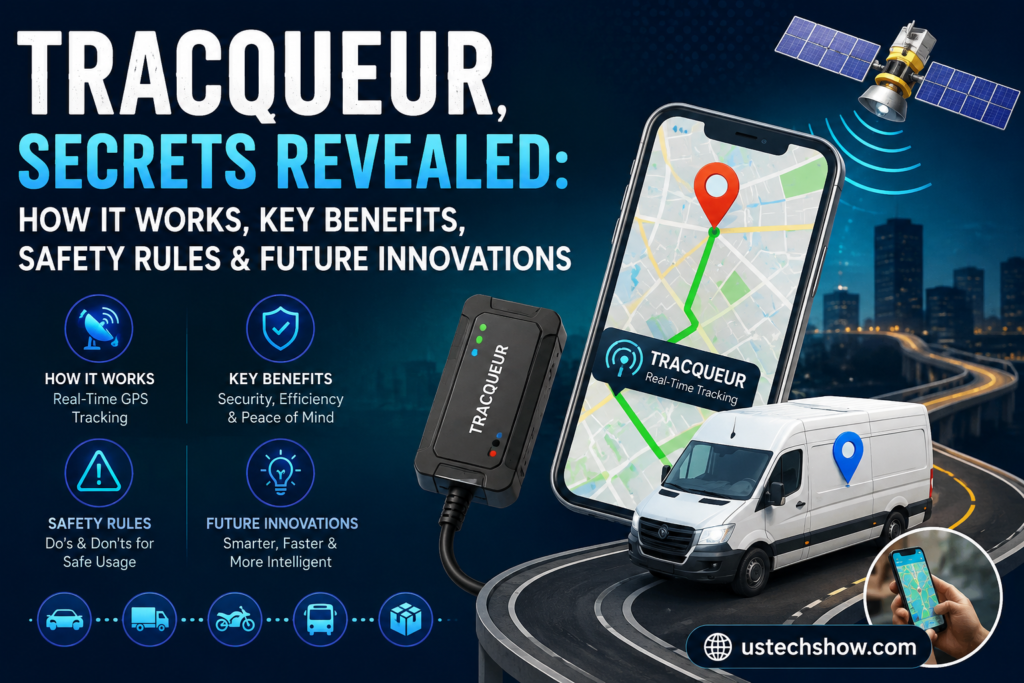
An advanced tracqueur works in a simple way because most devices follow three (3) basic steps to find a location, send information, and show results. The first stage uses GPS satellites to determine an accurate position, especially outdoors, while Bluetooth, Wi-Fi, mobile networks, and other locations services improve precision.
The second step involves sending data after the device knows its position through a network, connection, or signal.
The third phase focuses on showing what appears inside an app on a phone or tablet, where users can open an exact map to view a travel bag, monitor traveling progress, check luggage nearby, confirm whether it remains at an airport, track moving baggage, or identify a specific area.
In my experience, modern systems provide extra features such as location history, movement alerts, notify functions when an item leaves a safe zone, and smarter tracking tools that remain highly useful.
The entire process happens within seconds, giving users the details they need right away through monitoring, positioning, geolocation, navigation, connectivity, communication, wireless data transmission, synchronization, a digital interface, real-time updates, tracking technology, a smart locator, optimized route analysis, detection, improved accuracy, wider coverage, stronger operational efficiency, and automated notifications.
Different Types of Tracqueur Devices
Every tracqueur is built for a specific job, and the different devices available today are carefully designed to meet various needs. Among the several types available, the most common is the vehicle tracker used in cars, trucks, motorcycles, and delivery vehicles, helping owners and businesses use advanced systems to manage fleets, improve routes, increase protection, and reduce theft risks at all times.
Another popular option is the personal tracker for people, where parents, children, families, elderly relatives, and those needing extra support can benefit from emergency buttons. If a user feels unsafe, they can press a button, send an alert to family members or caregivers.
A pet tracker is attached to a collar, allowing a dog or cat that runs away to be found by its owner quickly through a location app, bringing peace of mind when a pet wanders.
An object tracker is a small device for everyday items such as keys, wallets, backpacks, and luggage, remaining lightweight, easy to carry, and useful for daily tasks without anyone noticing it.
I have also seen fitness trackers become valuable for health, activity, track performance, steps, movement, sleep, wellness, and personal information. While different from traditional trackers, they belong to the wider tracking ecosystem because they monitor, record, and analyze important data through GPS, tracking, monitoring, security, safety, navigation, geolocation, fleet management, route optimization, asset tracking, mobile application features, recovery, communication, alerts, wearable technology, stronger protection, and seamless connectivity.
Best Features to Look for in a Tracqueur
When choosing a tracqueur, the right features can make a big difference in daily use. From my experience, real-time tracking is one of the most useful functions because it lets you see an item or loved one at any moment. For example, parents can confirm a child has arrived at school safely.
A strong geofencing feature allows you to set a safe area around a device and receive an alert immediately if it leaves that zone. Advanced movement alerts can notify you when an object or pet is moving unexpectedly, while an SOS button helps during emergencies.
A detailed location history shows where a person has been, and a long battery life with a waterproof design makes the tracker more reliable in different conditions.
A good mobile app should be easy to use, helping users manage multiple devices without stress. Modern solutions also combine monitoring, security, safety, geolocation, positioning, navigation, notifications, protection, connectivity, digital tracking, technology, a user-friendly interface, emergency response tools, location-based services, wireless communication, asset tracking, smart management, surveillance, control, improved performance, greater reliability, enhanced mobility, and better accuracy for a complete tracking experience.
Tracqueur Benefits That Make Life Easier
Many people are choosing a tracqueur every year because it offers practical benefits that simplify modern life. The first and most major benefit is real-time tracking, allowing users to see an item, vehicle, pet, or loved one at any moment.
This information becomes especially valuable during stressful situations, providing peace of mind and helping you quickly check a location whenever needed, so you naturally worry less.
For example, a parent may feel more relaxed after confirming a child has safely arrived at school, while a traveler can monitor luggage moving toward the correct destination.
A tracqueur also helps save time, reducing hours spent searching and allowing users to locate items within seconds.
For vehicle owners, these devices improve security, increase the chances of recovering a stolen asset, while businesses gain better efficiency, reduce costs, enhance customer service, and strengthen management.
In 2026, this technology supports monitoring, protection, geolocation, navigation, connectivity, communication, mobility, asset tracking, reliability, convenience, productivity, surveillance, recovery, and stronger operational performance.
Many people wonder whether a tracqueur and a GPS tracker are the same; they are similar, but not exactly. A GPS tracker is a type that mainly uses satellite signals to find a location; however, a tracqueur can combine Bluetooth, Wi-Fi, mobile networks together for a more flexible solution.
For another example, it can locate keys inside a house, track a car across a city, and save time at the same moment. In short, some trackers and devices rely on different methods, and understanding this difference helps users pick the right option for their needs.
Modern tracking systems also use positioning, wireless communication, advanced technology, a locator, monitoring, movement detection, network and signal processing, mapping, transportation support, digital tools, smart features, greater accuracy, optimized route planning, wider coverage, and location-based services.
Where Can You Use a Tracqueur?
Thanks to their popular flexibility, tracqueur devices are used in many different places and situations every day. At home, they help find items that often go missing, and many people attach them to keys, wallets, remote controls, and backpacks.
Imagine you never have to spend twenty (20) minutes searching before work because a simple tracker can save time, reduce frustration, and improve every day routines. Travelers also benefit greatly from this technology, especially in airports where busy travel schedules can leave luggage delayed or misplaced.
With a tracker inside a suitcase, users can check its location directly from a phone, adding confidence during trips. Families use tracqueur systems for safety, allowing parents to monitor children and their locations on a school outing, while caregivers track elderly relatives who may need assistance.
Pet owners rely on them to locate dogs and cats, and businesses use them to manage vehicles, deliveries, and equipment.
From my experience, these tools are useful almost everywhere, whether on the road or at work, helping users stay informed and in control through monitoring, tracking, geolocation, navigation, connectivity, communication, security, protection, asset management, logistics, transportation, mobility, recovery, efficiency, real-time updates, positioning, digital systems, a smart locator, network integration, wireless communication, streamlined operations, and enhanced surveillance capabilities.
Tracqueur Safety and Privacy Rules
A tracqueur is safe, legal, and used correctly when you only track your own items, pets, or family members without any issues, while businesses also rely on it for vehicle fleets and delivery monitoring through tracking systems.
From my experience, problems start when someone tries to track someone without permission, which is often illegal in many places, so it is important to always respect privacy and follow local laws.
Users should keep their data safe by using trusted apps, strong passwords, secure networks, and properly protected devices with alerts for unknown trackers to help prevent hidden tracking and protect information so it stays private.
Good practice includes strong security, protection, cybersecurity, authentication, authorization, compliance, regulations, proper consent, confidentiality, avoiding unwanted surveillance, ensuring digital safety, controlling network access, verifying user identity, reducing risk, improving awareness, maintaining monitoring, accurate location tracking, ensuring accountability, supporting transparency, strong data protection, and secure communication at every level of use.
How to Choose the Right Tracqueur
When picking the right tracqueur, everything depends on what you want to track, whether it is a car, pet, GPS-based item, or something smaller like keys and wallets.
A mobile network or Bluetooth tracker support is often enough depending on usage, but the choice is never simple. From my experience, battery life really matters because some devices last only a few days, while others go for weeks, so you must think how often you will charge it.
Accuracy is also important, so always make sure the device shows the correct location reliably during tracking and monitoring. It is smart to check for alerts, geofencing, and emergency features, especially when safety is a priority.
Some tracqueur systems require a monthly subscription, so you should carefully decide what fits your needs, budget, and lifestyle before final selection. Good selection, criteria, comparison, and evaluation of device performance improve overall tracking, geolocation, navigation, positioning, connectivity, wireless communication, smart technology, security, protection, reliability, efficiency, usability, mobility, usage, cost, service, and plan choices for the best result.
The Future of Tracqueur Technology
In Tracqueur vision for 2026, AI and artificial intelligence are shaping technology that is growing, making devices smarter and more powerful.
This shift brings smarter alerts and real-time alerts that can predict unusual movements and warn users with advanced notifications when they track items using trackers and connected systems.
These systems are integrating with smart cities and smart homes, including homes in malls and airports, where cameras, locks, and other devices can connect easily.
With better battery life and easier charging, devices last longer, while improving indoor tracking becomes more accurate, smaller, and easier to use, making life more simpler and improving daily life and life safer. In the fast moving future, potential risks and problem scenarios are reduced as innovation continues.
Conclusion
In the final view of Tracqueur, I’ve seen it grow as a powerful, simple, tool that helps people find, lost, items, and protect, loved ones.
It gives better control, life through keys, luggage, pets, cars, and stronger family safety, daily life support.
Everything feels more easier, safer, and it also saves time, reduces stress with clear information for businesses, travelers using strong tracking abilities.
Users must choose, right, needs and act responsible, use with privacy, features, setup in 2026.
It is treated as a must-have tool to track, first with real understanding, respect, correctly.
Its full journey, evolution moves from a simple concept into a sophisticated solution for industries shaped by technological advancements and real-world needs, challenges.
It helps streamline operations, efficiency through success stories, versatility, effectiveness, solving problems, future needs.
With advanced features, innovation, it improves tracking, monitoring, optimizing processes.
It builds stronger industry solutions, forefront, adapting, benchmarks, excellence, technology-driven strategies across the world, technology.
This technology expands into personal safety, vehicle monitoring, business logistics, asset management, and full tracking systems in everyday life.
It offers real-time visibility, improved security, convenience, and delivers modern solutions, smarter, reliable, easier use.
It also supports protecting family members, managing fleet, important assets, with better understanding systems and strong benefits powered by modern tracking technology.
(FAQs)
What is a Tracqueur?
A tracqueur is a tracking device or system that helps you find and monitor items, vehicles, pets, or people using GPS, Bluetooth, Wi-Fi, or mobile networks.
How does a Tracqueur work?
It works in three steps: first it finds the location using GPS or signals, then sends the data through a network, and finally shows the location on a mobile app or map.
Is a Tracqueur the same as a GPS tracker?
Not exactly. A GPS tracker mainly uses satellites, while a tracqueur can also use Bluetooth, Wi-Fi, and mobile networks for more flexible tracking.
What can I use a Tracqueur for?
You can use it for cars, bikes, pets, luggage, keys, and even for monitoring children or elderly family members for safety.
Is it safe to use a Tracqueur?
Yes, it is safe if used properly. You should only track your own items or people with permission and always use secure apps and passwords.
Do Tracqueur devices need internet?
Most tracqueurs need some form of connection like mobile data, Wi-Fi, or Bluetooth to send location updates to your phone.
How long does the battery last?
Battery life depends on the device. Some last a few days, while advanced models can last several weeks on a single charge.
Can a Tracqueur work indoors?
Yes, but indoor accuracy depends on the type of device. Bluetooth and Wi-Fi-based tracqueurs usually work better indoors than GPS-only devices.
Do I need to pay monthly for a Tracqueur?
Some tracqueurs require a monthly subscription for mobile network tracking, while basic Bluetooth trackers usually do not.
What is the future of Tracqueur technology?
Future tracqueurs will be smarter with AI features, better accuracy, longer battery life, and integration with smart homes and smart cities.