

Introduction
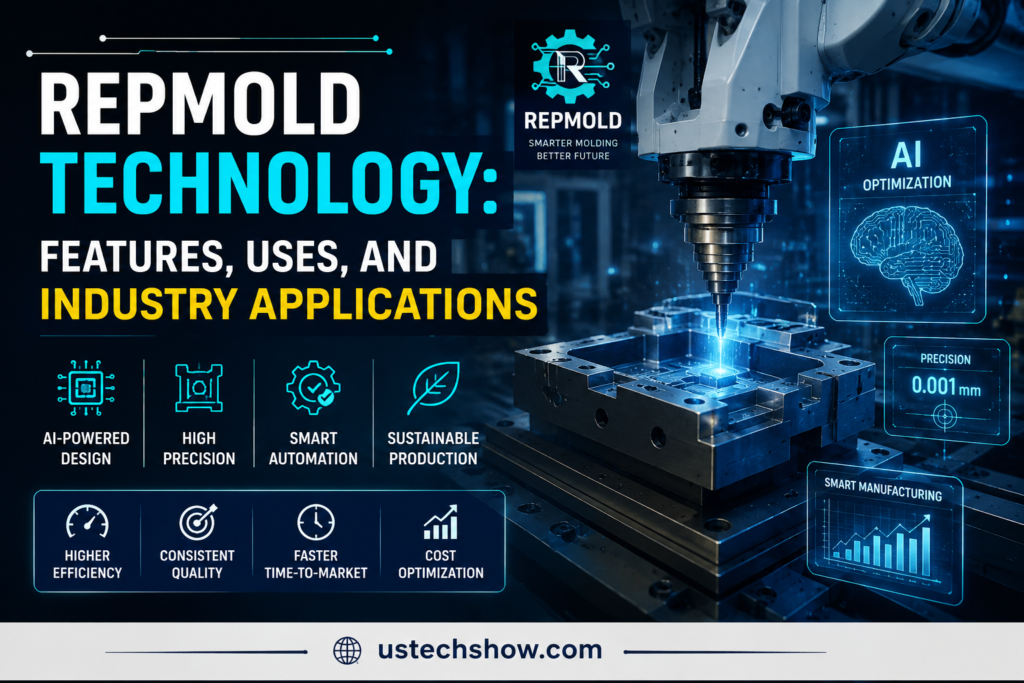
Manufacturing industries are rapidly evolving as digital systems, automation, and artificial intelligence reshape traditional production methods. One of the emerging concepts in this transformation is RepMold technology, a modern approach to molding, replication, and precision manufacturing. It combines advanced engineering, smart software systems, and AI-driven optimization to improve accuracy, reduce waste, and speed up production.
Unlike conventional molding techniques that rely heavily on manual calibration and repetitive trial-and-error processes, RepMold introduces a more intelligent, data-driven system. It is designed to support industries that demand high precision, scalability, and efficiency—ranging from automotive to healthcare manufacturing.
This article explores RepMold technology in depth, including how it works, its features, applications, advantages, challenges, and its role in Industry 4.0.
What Exactly Is RepMold Technology and How It Works
RepMold technology is an advanced manufacturing system that focuses on precision molding and replication using intelligent digital modeling and automation tools. It integrates design software, simulation engines, and production machinery into a unified workflow.
At its core, RepMold uses digital models to create highly accurate molds that can be replicated consistently across large production batches. Instead of relying only on physical prototyping, the system first builds virtual models, tests them digitally, and then transfers optimized instructions to manufacturing machines.
This reduces human error and ensures each produced component matches exact specifications.
The Evolution of Modern Molding Toward RepMold Systems
Traditional molding processes have been used for decades in manufacturing industries. However, they often involve manual adjustments, long production cycles, and higher material waste.
Over time, industries began adopting computer-aided design (CAD) and computer-aided manufacturing (CAM) systems. RepMold represents the next stage in this evolution.
It combines:
- Digital modeling
- AI optimization
- Real-time simulation
- Automated production control
This evolution reflects the broader shift toward smart factories and Industry 4.0, where machines and software work together seamlessly.
Core Engineering Principles Behind RepMold Innovation
RepMold is built on several key engineering principles:
- Digital precision modeling
- Feedback-based optimization
- Material behavior prediction
- Automated correction systems
These principles allow the system to refine designs before physical production begins. By simulating stress, heat, and pressure conditions, RepMold ensures molds are structurally strong and efficient.
This engineering foundation makes the technology suitable for complex and high-performance manufacturing environments.
How Artificial Intelligence Enhances RepMold Manufacturing
Artificial intelligence plays a crucial role in RepMold systems. AI algorithms analyze design data, identify inefficiencies, and suggest improvements before production starts.
AI helps in:
- Optimizing mold structures
- Predicting material performance
- Reducing production errors
- Improving cycle time efficiency
Over time, the system learns from past manufacturing data, becoming more accurate and efficient with each production cycle. This adaptive intelligence is one of the key strengths of RepMold technology.
Step-by-Step Working Process of RepMold Technology
The RepMold process typically follows these steps:
- Digital Design Creation
Engineers create a 3D model of the product using CAD tools. - Simulation and Testing
The system simulates real-world conditions like pressure and heat. - AI Optimization
AI refines the design for better performance and material efficiency. - Mold Generation
A precise mold structure is generated digitally. - Automated Manufacturing
Machines produce the mold based on optimized instructions. - Quality Validation
The final product is tested for accuracy and consistency.
This structured workflow reduces errors and ensures high-quality output.
Smart Simulation and Digital Testing in RepMold Systems
One of the most powerful features of RepMold technology is simulation. Before any physical material is used, the system performs virtual testing.
These simulations help:
- Detect structural weaknesses
- Predict deformation under pressure
- Test heat resistance
- Improve durability
By identifying problems early, manufacturers save both time and material costs.
Key Features That Make RepMold Stand Out in Manufacturing
RepMold includes several advanced features that distinguish it from traditional systems:
- High-precision digital modeling
- AI-driven optimization engine
- Real-time simulation capabilities
- Automated production integration
- Error reduction mechanisms
These features make it ideal for industries requiring strict accuracy and repeatability in production.
Industry Applications of RepMold Across Multiple Sectors
RepMold technology is widely applicable across several industries:
Automotive Industry
Used for manufacturing precise engine parts, panels, and structural components.
Healthcare Sector
Helps in producing medical devices, implants, and surgical tools with extreme accuracy.
Electronics Industry
Supports micro-component manufacturing for smartphones, computers, and devices.
Consumer Goods
Used in producing durable, uniform, and cost-efficient everyday products.
Its flexibility allows it to adapt to both small-scale and large-scale production environments.
Benefits of Adopting RepMold for Modern Production Lines
RepMold offers numerous benefits:
- Improved manufacturing accuracy
- Reduced production costs
- Faster product development cycles
- Lower material waste
- Enhanced product consistency
These advantages help companies stay competitive in fast-moving markets where efficiency is critical.
Challenges and Practical Limitations of RepMold Systems
Despite its advantages, RepMold technology also faces some challenges:
- High initial setup cost
- Requirement for skilled operators
- Complex system integration
- Dependence on advanced digital infrastructure
Small manufacturers may find it difficult to adopt initially, but long-term benefits often outweigh the initial investment.
RepMold in Industry 4.0: Automation, Data, and Smart Production
RepMold is closely aligned with Industry 4.0 principles, which focus on automation, data exchange, and smart manufacturing systems.
It contributes by:
- Connecting machines through smart networks
- Using real-time data analytics
- Enabling predictive maintenance
- Automating production decisions
This integration creates a more efficient and intelligent manufacturing environment.
Future Potential and Market Impact of RepMold Technology
The future of RepMold looks highly promising. As AI and machine learning continue to evolve, the system is expected to become even more autonomous and precise.
Future developments may include:
- Fully self-correcting production systems
- Faster AI-driven design generation
- Greater material innovation
- Wider accessibility for small businesses
Its impact on global manufacturing could be significant, reducing costs while increasing production quality across industries.
Conclusion
RepMold technology represents a major step forward in modern manufacturing. By combining AI, simulation, and automated production systems, it offers a smarter and more efficient alternative to traditional molding techniques.
Although challenges such as cost and complexity still exist, its long-term benefits in accuracy, speed, and sustainability make it a valuable innovation for the future of industrial production.
As industries continue moving toward digital transformation, RepMold is likely to play a key role in shaping the next generation of manufacturing systems.
FAQs
What is RepMold technology used for?
It is used for precision molding, replication, and manufacturing across industries like automotive, healthcare, and electronics.
Is RepMold better than traditional molding methods?
Yes, it offers higher accuracy, faster production, and reduced material waste compared to traditional methods.
Does RepMold use artificial intelligence?
Yes, AI is a core part of RepMold for optimization, simulation, and predictive analysis.
Can small businesses use RepMold?
Yes, but initial costs and technical requirements may be challenging for small manufacturers.
Is RepMold part of Industry 4.0?
Yes, it is closely aligned with Industry 4.0 due to its automation, data integration, and smart production capabilities.
More Technology
repmold technology, repmold uses, repmold features, smart manufacturing, AI in manufacturing, Industry 4.0, modern molding systems, industrial automation